Burn Hole in a Leather Car Seat: What to Do and How Professional Repair Works
June 23, 2026
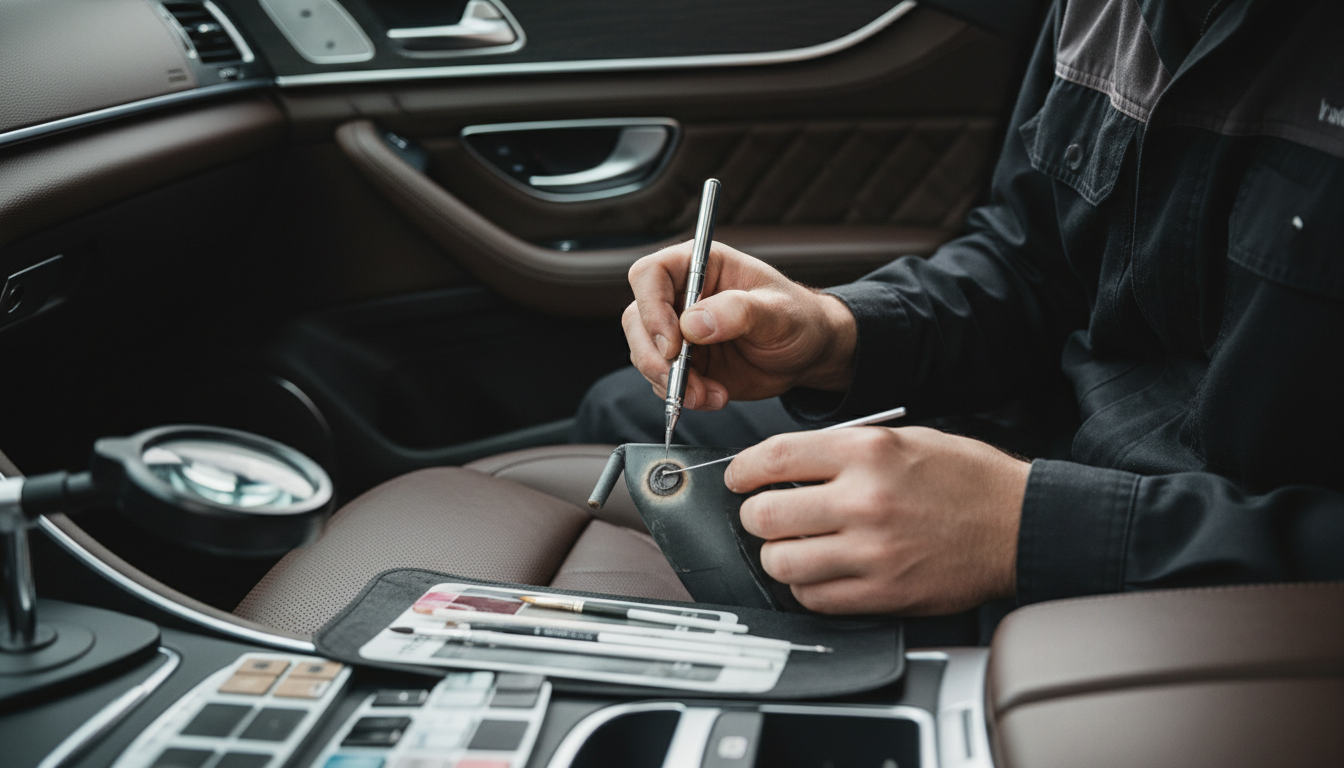
Discovering a burn hole in your leather car seat can be a frustrating experience. Whether it’s from a cigarette ash, a hot object, or an accidental encounter with something heated, burns on leather automotive upholstery are among the most challenging types of damage to address. Unlike scratches or minor scuffs, a burn physically alters the leather’s structure, creating a hole or hardened area that cannot simply be wiped away or conditioned back to its original state.
Many car owners immediately search for quick DIY solutions, hoping to mask the damage with markers, patches, or leather filler kits available at automotive stores. While the temptation to save money and fix it yourself is understandable, improper repairs often make the situation worse, leading to more expensive professional restoration later. This comprehensive guide explains why professional repair is the best approach for burn damage, what information specialists need to provide an accurate assessment, and how the restoration process actually works from start to finish.
Why You Shouldn’t Try to Mask a Burn Hole Yourself
The internet is filled with tutorials promising easy fixes for leather burns, but the reality is far more complex. Leather seat repair requires specialized knowledge of leather types, dyes, textures, and structural restoration techniques that most DIY kits simply cannot provide. Here’s why amateur attempts usually fail:
- Color matching is extremely difficult: Automotive leather comes in hundreds of shades, and lighting conditions affect how colors appear. Store-bought repair kits offer limited color options that rarely match your specific interior perfectly.
- Texture replication requires professional tools: Leather seats have distinct grain patterns that vary by manufacturer and model year. Without proper molding tools and techniques, repairs look flat and obvious.
- Structural integrity matters: A burn hole isn’t just a surface issue—it’s a complete breakdown of the leather’s fiber structure. Simply filling it with paste creates a weak point that will crack and fail under normal use.
- Chemical damage can spread: Some DIY products contain harsh chemicals that can discolor or further damage the surrounding leather, expanding the affected area.
- Resale value protection: Professional repairs maintain your vehicle’s value, while obvious amateur fixes signal neglect to potential buyers.
Professional technicians who specialize in leather restoration invest years learning their craft and use commercial-grade materials unavailable to consumers. The difference between a professional repair and a DIY attempt is typically obvious to anyone who looks closely at the seat, and sometimes even from a distance.
Understanding Different Types of Leather Burns
Not all burns affect leather seats the same way, and the repair approach varies depending on the type and severity of damage. Understanding these categories helps both in assessing the damage and in communicating with repair professionals:
Surface burns occur when something hot briefly touches the leather, creating discoloration or slight hardening without penetrating completely through. These are the easiest to repair, often requiring only surface preparation, color restoration, and protective coating.
Partial-thickness burns affect the top layers of leather but don’t create a complete hole. The leather may be hardened, discolored, and textured differently than surrounding areas. These require more extensive preparation, including softening the damaged leather and rebuilding the surface layers.
Full-thickness burns create actual holes in the leather, destroying all layers. These represent the most challenging repairs, requiring structural reinforcement from behind, filling, texturing, and multi-layer color matching. A cigarette burn typically creates this type of damage.
The repair complexity and cost increase significantly as you move from surface burns to full-thickness damage. This is why getting an accurate professional assessment is crucial before proceeding with any repair approach.
What Information Professionals Need for Photo Assessment
Many reputable leather repair specialists offer preliminary assessments based on photographs, which is convenient for busy car owners. However, the accuracy of this assessment depends entirely on the quality and completeness of the information you provide. To get a reliable estimate for repair of a burn hole in leather seats, professionals need specific details:
- Clear, well-lit photographs from multiple angles: Take photos in natural daylight if possible, showing the burn from directly above, at 45-degree angles, and from the side to reveal any depth or texture changes.
- Close-up detail shots: Capture the burn itself in high resolution, filling most of the frame, so the technician can assess the exact size and depth of damage.
- Context photos showing the entire seat: These help professionals understand the seat’s overall condition, color variations due to wear or sun exposure, and the specific leather type.
- Measurements of the damaged area: Use a ruler or coin for scale reference in at least one photo, or provide dimensions in millimeters.
- Vehicle make, model, and year: Different manufacturers use different leather types, treatments, and colors, which affects repair approach and material selection.
- Interior color code if available: This information can sometimes be found on door jamb stickers or in owner’s documentation.
- Description of the burn’s cause: Knowing whether it was a cigarette, hot metal, or other heat source helps technicians anticipate the type of damage.
- Information about previous repair attempts: If you’ve already tried to fix it yourself, professionals need to know what products were used.
Providing comprehensive information upfront allows repair specialists to give you an accurate quote and timeline, preventing surprises when you arrive for service. It also demonstrates whether the shop is thorough and professional in their assessment process.
The Professional Leather Burn Repair Process Explained
Understanding how professionals approach restoration of burned leather seats helps you appreciate why this work requires expertise and why the results justify the investment. Here’s what happens during a proper repair:
Step 1: Thorough Assessment and Preparation
The technician examines the burn under proper lighting, assessing the depth, size, and leather condition around the damaged area. They identify the leather type (finished, aniline, semi-aniline, or synthetic) and test the surrounding area’s flexibility and color fastness. The damaged area is then carefully cleaned using specialized leather cleaners that remove oils, dirt, and any previous treatment attempts without further damaging the material.
Step 2: Structural Reinforcement
For burns that penetrate completely through the leather, the technician applies a backing material from underneath the seat cover. This might involve carefully accessing the back of the upholstery, which sometimes requires partial disassembly of the seat. The backing—often a flexible mesh or specialized leather substrate—provides a foundation for the subsequent filling and ensures the repair won’t simply collapse under pressure.
Step 3: Filling and Leveling
Professional-grade leather filler, formulated to remain flexible after curing, is applied in thin layers. Each layer is allowed to cure partially before the next is added, building up gradually until the filled area is slightly above the surrounding leather surface. Rushing this process by applying too much filler at once leads to cracking and failure. Once fully cured, the filler is carefully sanded and shaped to match the exact contour of the seat.
Step 4: Texture Replication
This step separates professional work from amateur attempts. Using heat-activated grain pattern molds or custom texturing tools, the technician recreates the leather’s original grain pattern in the repair area. For factory leather, they may have specific molds matching that manufacturer’s pattern. For custom or aftermarket leather, they match the surrounding texture as closely as possible using various techniques.
Step 5: Color Matching and Application
Color matching is both science and art. Professionals use spectrophotometers or extensive color libraries combined with trained eyes to mix custom colors matching your specific leather. They account for the seat’s age, sun exposure, and wear patterns that may have altered the original color. The color is applied in multiple thin layers, with each layer heat-set before the next application. This builds depth and durability that single-coat approaches cannot achieve.
Step 6: Sealing and Protection
Finally, the repaired area receives a protective topcoat matched to the leather’s original finish level—whether matte, satin, or gloss. This sealer protects the repair from UV exposure, abrasion, and moisture while ensuring the repaired section ages consistently with the surrounding leather.
The entire process for a cigarette-sized burn typically takes between two to four hours of actual work time, though scheduling and curing time may mean your vehicle is at the shop for a full day or more.
Local Leather Repair vs. Mobile Service: What to Expect
When searching for leather burn repair services in Riga or throughout Latvia, you’ll encounter both stationary shops and mobile repair services. Each has advantages depending on your situation:
Workshop-based repair services offer controlled environments with optimal lighting, temperature, and humidity for leather work. They have full access to all tools and materials, and can perform more complex repairs that require seat disassembly. The controlled environment ensures proper curing of materials and accurate color matching under consistent lighting conditions.
Mobile repair services provide convenience by coming to your location—whether home, office, or parking area. They’re ideal for minor to moderate damage that doesn’t require seat removal. However, environmental conditions like temperature, humidity, and lighting at your location can affect the repair quality and curing time.
For burn repairs specifically, workshop service is generally preferable because burns often require the structural reinforcement and precise environmental control that shops provide. However, experienced mobile technicians can handle many burn repairs successfully if conditions are appropriate.
How Long Does a Professional Leather Burn Repair Last?
One of the most common questions about automotive leather restoration concerns longevity. When properly executed by skilled technicians using quality materials, a leather burn repair should last the remaining life of your vehicle under normal use conditions.
Professional repairs become an integral part of the seat rather than simply a patch sitting on top. The flexible fillers, properly replicated texture, and protective coatings mean the repaired area moves and wears with the surrounding leather. You should not be able to feel any difference when sitting on a properly repaired burn, and the visual match should be excellent from normal viewing distances.
That said, longevity depends on several factors: the quality of materials used, the technician’s skill level, the location of the burn on the seat (high-wear areas face more stress), and how well you maintain your leather afterward. Regular cleaning with appropriate leather cleaners and conditioning with quality leather conditioners helps both the repair and original leather remain supple and protected.
Most professional shops confident in their work offer warranties ranging from six months to several years, covering repair failure due to workmanship issues. This warranty doesn’t typically cover new damage or failure due to neglect, but it demonstrates the shop’s confidence in their repair durability.
Cost Considerations for Leather Burn Repair
The investment required for professional leather seat burn repair varies considerably based on damage extent, leather type, and regional labor rates. In Latvia and specifically Riga, prices for repairing a single cigarette-sized burn typically range from €80 to €200, while larger or multiple burns can cost €200-€400 or more.
These prices reflect the specialized skills, professional-grade materials, and time-intensive process involved. When you consider that replacing an entire leather seat cover can cost €500-€1,500 or more depending on the vehicle, and that quality repairs maintain your car’s value, professional restoration represents excellent value.
Some factors that influence repair costs include the burn’s size and depth, the seat’s location and accessibility, the leather type and color complexity, whether the seat requires partial disassembly, the number of burns being repaired simultaneously, and the shop’s expertise level and reputation.
Beware of quotes that seem too good to be true—extremely low prices often indicate shortcuts in materials or process that lead to obvious repairs or quick failure. Conversely, the most expensive option isn’t always the best; look for shops with strong portfolios, positive customer reviews, and transparent explanations of their process.
Maintaining Your Leather Seats After Repair
Once your leather seat has been professionally repaired, proper maintenance ensures both the repair and the original leather remain in excellent condition for years. Follow these practices for optimal results:
- Allow adequate curing time: Don’t use the repaired seat heavily for at least 24-48 hours after repair, following your technician’s specific recommendations.
- Clean regularly with appropriate products: Use pH-neutral leather cleaners specifically formulated for automotive leather, avoiding household cleaners that can damage the finish.
- Condition periodically: Apply quality leather conditioner every 3-6 months to keep leather supple and prevent cracking.
- Protect from extreme heat: Use sunshades in summer to prevent UV damage and excessive heat that can fade and dry leather.
- Address spills immediately: Blot liquids quickly with a clean cloth to prevent staining and damage to both original and repaired areas.
- Avoid sharp objects: Be mindful of keys, belt buckles, and other items that can scratch or puncture leather.
With proper care, your professionally repaired leather seat will continue looking excellent and provide comfortable service for many years, protecting your investment in both the repair and your vehicle overall.
Conclusion: Trust Professionals for Lasting Results
A burn hole in your leather car seat doesn’t have to be a permanent eyesore or a reason to accept diminished vehicle value. While DIY solutions might seem tempting, they rarely deliver satisfactory long-term results and often complicate eventual professional repair. Understanding why amateur approaches fail, what information professionals need for accurate assessment, and how the proper restoration process works empowers you to make informed decisions about repairing your vehicle’s leather interior.
Professional leather repair specialists possess the knowledge, tools, and materials necessary to restore burned leather seats to near-invisible condition. The investment in quality repair work pays dividends in maintained vehicle value, aesthetic appeal, and the satisfaction of driving a car with a pristine interior. When choosing a repair service, look for experienced technicians who can explain their process, show examples of previous work, and provide clear information about timelines and warranties.
Whether dealing with a small cigarette burn or more extensive damage, prompt professional attention yields the best results. The longer damage goes unaddressed, the more surrounding leather can deteriorate and the more complex the eventual repair becomes.
If you’re dealing with burn damage to your leather car seats and want professional restoration that truly lasts, don’t settle for temporary cosmetic fixes. Contact experienced leather restoration specialists in Riga for expert assessment and repair of your automotive leather interior, ensuring your vehicle’s seats look and feel like new again with repairs that stand the test of time.