Yacht and Boat Leather Restoration: Protection from Sun, Moisture, and Salt
June 23, 2026
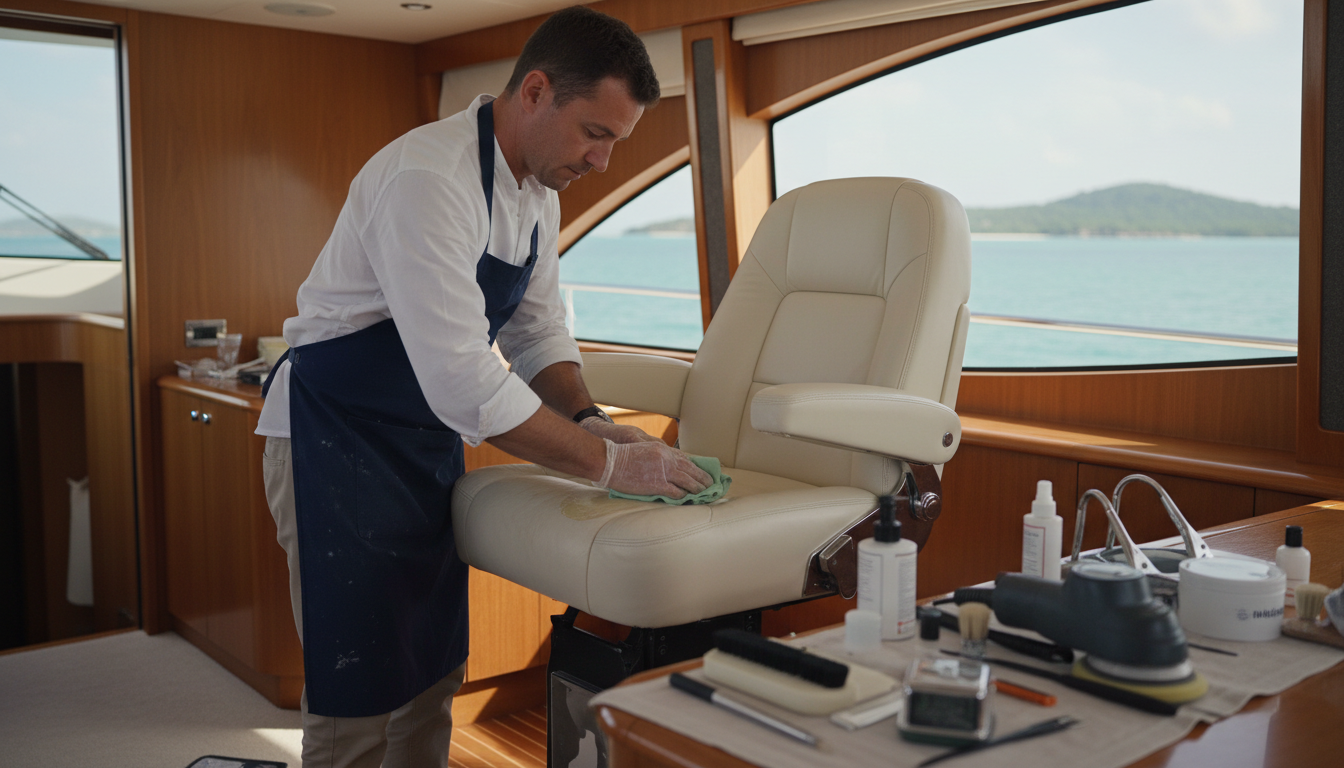
The marine environment presents unique and relentless challenges for yacht and boat interiors. Unlike automotive or residential leather, yacht leather faces constant exposure to harsh ultraviolet radiation, high humidity levels, salt spray, and dramatic temperature fluctuations. These extreme conditions accelerate deterioration, causing fading, cracking, stiffness, and structural damage that can compromise both aesthetics and functionality. Understanding the specific demands of marine leather restoration is essential for boat owners who want to preserve their investment and maintain the luxurious appearance of their vessel’s interior.
Professional yacht leather restoration goes far beyond simple cleaning or conditioning. It requires specialized knowledge of marine-grade materials, advanced repair techniques, and protective treatments designed specifically for the demanding maritime environment. Whether you’re dealing with a sun-bleached captain’s chair, water-damaged salon seating, or salt-corroded leather panels, comprehensive restoration can breathe new life into your vessel’s interior while providing long-term protection against ongoing environmental assault.
Understanding the Unique Challenges of Marine Leather Environments
The marine environment is exceptionally hostile to leather materials. Unlike land-based applications, yacht and boat interiors face a perfect storm of destructive factors working simultaneously to degrade leather surfaces. Ultraviolet radiation at sea is significantly more intense than on land, as sunlight reflects off water surfaces, effectively doubling UV exposure. This concentrated radiation breaks down the protective finish on leather, causing color fading, surface drying, and eventual cracking of the material itself.
Moisture presents another critical challenge in marine settings. The constant presence of humidity, occasional water intrusion, and condensation create an environment where leather can become waterlogged, develop mildew, or lose its natural oils. Salt spray adds a particularly corrosive element, as salt crystals draw moisture from leather fibers while leaving behind residues that accelerate deterioration. The combination of salt and moisture creates a cycle of damage that can quickly transform supple leather into stiff, brittle material prone to tearing and structural failure.
Temperature extremes compound these problems. Yacht cabins can experience dramatic temperature swings, from intense heat when closed during sunny days to cooler temperatures at night or during rough weather. These thermal cycles cause leather to expand and contract repeatedly, stressing the material’s structure and accelerating the breakdown of both the leather itself and the stitching that holds upholstery together. Understanding these environmental factors is the first step in developing an effective restoration and protection strategy.
Common Types of Damage in Yacht and Boat Leather Interiors
Marine leather damage manifests in several distinct patterns, each requiring specific restoration approaches. Recognizing these damage types helps boat owners understand what restoration processes will be necessary and what results they can expect from professional intervention.
- UV fading and discoloration: Sun exposure causes leather to lose its original color, typically resulting in faded, bleached appearances on surfaces exposed to direct sunlight, while protected areas retain darker original tones
- Surface cracking and crazing: Drying effects from sun and salt cause the protective topcoat to crack in web-like patterns, eventually extending into the leather itself
- Water staining and mildew: Moisture penetration creates dark spots, water rings, and sometimes fungal growth that discolors and weakens leather fibers
- Salt residue damage: White crystalline deposits form on leather surfaces, drawing out moisture and leaving stiff, hardened areas prone to cracking
- Stitching deterioration: Thread used in marine upholstery breaks down under UV exposure and salt corrosion, causing seams to fail before the leather itself
- Structural deformation: Repeated wetting and drying cycles cause leather to stretch, shrink unevenly, or lose its shaped form
Each of these damage types requires targeted treatment protocols. Surface-level fading might be addressed through cleaning and recoloring, while structural cracks demand filling, repair, and complete refinishing. Professional assessment identifies the full extent of damage and determines the most effective restoration pathway.
The Professional Yacht Leather Restoration Process
Comprehensive marine leather restoration follows a systematic approach designed to address existing damage while preparing surfaces for long-term protection. The process typically begins with thorough assessment and documentation of all damaged areas, allowing technicians to develop a customized restoration plan for each specific situation.
The restoration sequence generally proceeds through these critical stages:
- Deep cleaning and salt removal: Specialized marine leather cleaners remove salt deposits, dirt, oils, and surface contaminants without damaging the leather substrate
- Damage assessment and preparation: All cracks, tears, and structural issues are identified and prepared for repair through careful surface preparation
- Structural repairs: Tears are stitched or patched, deep cracks are filled with flexible compounds, and any necessary reinforcement is applied to prevent future failure
- Surface restoration and refinishing: Damaged topcoats are removed or prepared, then new protective layers are applied to restore smooth, uniform surfaces
- Color restoration: Professional-grade marine leather dyes are applied in multiple layers to restore original color or create desired custom finishes
- Protective coating application: Marine-grade sealants and UV-resistant topcoats are applied to protect restored surfaces from future environmental damage
- Conditioning and finishing: Specialized conditioners restore flexibility and suppleness while enhancing the leather’s natural characteristics
This multi-stage process ensures that restoration addresses not just cosmetic appearance but also structural integrity and long-term durability. Professional technicians use marine-specific products formulated to withstand the unique challenges of the maritime environment, ensuring results that last far longer than standard automotive or furniture leather treatments.
Restoring Specific Yacht Interior Components
Different areas of yacht and boat interiors require specialized restoration approaches based on their specific functions and exposure patterns. Captain’s chairs and helm seating face the most severe UV exposure, as they’re typically positioned in direct sunlight with minimal shade protection. These high-use areas also experience significant wear from constant contact, salt exposure from wet clothing, and mechanical stress from the seated position during vessel operation. Restoration of captain’s chairs often requires complete refinishing with the most durable marine-grade protective coatings available.
Salon seating and cabin sofas present different challenges. These areas may have better sun protection but often suffer from moisture intrusion, mildew development, and water staining. Cushions and upholstered surfaces in these locations frequently require removal for proper restoration, allowing technicians to address hidden moisture damage, treat mildew issues, and ensure complete drying before refinishing. The restoration process for these components often includes backing material treatment and mildew prevention measures to prevent recurrence.
Leather wall panels, headliners, and decorative surfaces require careful handling during restoration. These components are often bonded to substrates and cannot be easily removed, necessitating in-place restoration techniques. Professional technicians employ specialized methods for cleaning, repairing, and refinishing these surfaces without damaging underlying structures or creating mess in confined cabin spaces. The result is seamless restoration that maintains the yacht’s original design aesthetic while providing renewed protection.
Advanced Protection Strategies for Marine Leather
Restoration is only half the equation for yacht leather longevity. Implementing comprehensive protection strategies is essential for maintaining restored surfaces and preventing rapid re-deterioration. Modern marine leather protection combines advanced chemical treatments with practical maintenance protocols to maximize durability in harsh environments.
UV protection represents the most critical element of marine leather preservation. Professional-grade UV-resistant topcoats contain specialized absorbers and blockers that intercept harmful ultraviolet radiation before it can damage leather fibers or fade pigments. These protective layers must be reapplied periodically, as even the most durable coatings gradually degrade under constant sun exposure. Many yacht owners implement annual or biannual recoating schedules to maintain optimal protection levels.
Moisture and salt protection requires hydrophobic treatments that cause water to bead and roll off leather surfaces rather than penetrating into fibers. These treatments prevent water staining, reduce mildew risk, and help salt spray wash away naturally rather than crystallizing on surfaces. Combined with regular cleaning protocols that remove salt deposits before they can cause damage, these protective measures dramatically extend leather life in marine environments.
Temperature management, while challenging on boats, can be improved through ventilation strategies, protective covers when vessels are not in use, and window treatments that reduce solar heat gain. Even simple measures like opening hatches to promote air circulation or using fitted covers on exposed seating can make significant differences in how quickly leather deteriorates between professional maintenance intervals.
Maintenance Best Practices for Yacht Owners
Between professional restoration services, yacht owners can implement maintenance routines that significantly extend the life of marine leather interiors. Regular attention to basic care prevents minor issues from escalating into major damage requiring extensive restoration.
Weekly or after-use cleaning should focus on removing salt residue and surface contaminants. Use marine-specific leather cleaners rather than household products, as these formulations account for the unique pH balance and chemical composition needed for salt-exposed leather. Gentle cleaning with appropriate products removes corrosive elements before they can penetrate deep into leather structure.
Monthly conditioning treatments help maintain leather flexibility and prevent drying. Marine leather conditioners contain specialized moisturizers that don’t promote mildew growth despite high humidity environments. These products replenish natural oils lost to sun exposure and salt contact, keeping leather supple and resistant to cracking. Apply conditioners sparingly, as over-application can create sticky surfaces that attract dirt or promote mildew in humid conditions.
Seasonal professional inspections allow experts to identify emerging problems before they require extensive repairs. Small cracks can be addressed quickly and inexpensively, while delayed attention often allows damage to spread, requiring much more extensive and costly intervention. Think of professional inspections as preventive maintenance that protects your restoration investment and maintains your vessel’s value and appearance.
Choosing Professional Marine Leather Restoration Services
Not all leather restoration services possess the specialized knowledge and materials necessary for successful marine applications. When selecting a restoration provider for your yacht or boat, prioritize companies with specific marine experience and proven track records in the maritime environment. Ask about the products they use—generic automotive or furniture leather treatments simply won’t provide adequate durability in salt water environments.
Look for restoration services that offer comprehensive approaches including structural repairs, not just cosmetic refinishing. The best marine leather specialists understand that appearance and durability are equally important, and they won’t compromise structural integrity for quick cosmetic improvements. Request examples of previous marine projects and, if possible, speak with other boat owners who have used their services.
Geographic location matters for marine leather services. Providers located in coastal areas typically have more experience with salt damage and UV exposure patterns specific to marine environments. They’re also more likely to understand the unique challenges of working in confined boat spaces and dealing with marine-grade materials and substrates.
Conclusion: Protecting Your Marine Investment
Yacht and boat leather interiors represent significant investments that deserve proper care and professional restoration when needed. The harsh marine environment of intense UV radiation, constant moisture, and corrosive salt spray creates challenges unlike any other setting, demanding specialized knowledge, materials, and techniques for successful restoration and long-term protection.
Professional marine leather restoration addresses both immediate cosmetic concerns and underlying structural damage, while implementing protective measures that guard against future deterioration. From sun-faded captain’s chairs to water-damaged salon seating, expert restoration can reverse years of environmental damage and restore your vessel’s interior to like-new condition. Combined with appropriate maintenance routines and periodic professional care, restored marine leather can provide many additional years of beauty and functionality.
Whether you’re dealing with minor fading or extensive damage, addressing marine leather deterioration promptly prevents more serious problems and protects your vessel’s value. The difference between amateur attempts and professional marine leather restoration is dramatic—both in immediate results and long-term durability.
If your yacht or boat’s leather interior is showing signs of sun damage, salt exposure, or moisture deterioration, don’t wait for minor issues to become major problems. Contact professional marine leather restoration specialists in Riga who understand the unique demands of maritime environments and can restore your vessel’s interior to pristine condition with durable, long-lasting results that withstand the challenges of life at sea.